
Only the Spirit Can Use It
A meditation for what focus can't reach

A few days ago, one of my YouTube viewers Ulfr left a comment on this week’s Tao Te Ching Verse #6 video that names a confusion I think a lot of us share about meditation:
“You talk of emptying the mind in meditation. You need to be clearer about this, as it is often misunderstood. My understanding is that meditation is not about not thinking but about acknowledging your thoughts, viewing them as being like clouds, waiting for them to pass, not engaging with them, and bring your focus back from its wandering on to the breath. Developing clarity of focus is meditation. Please correct me if I am wrong…”
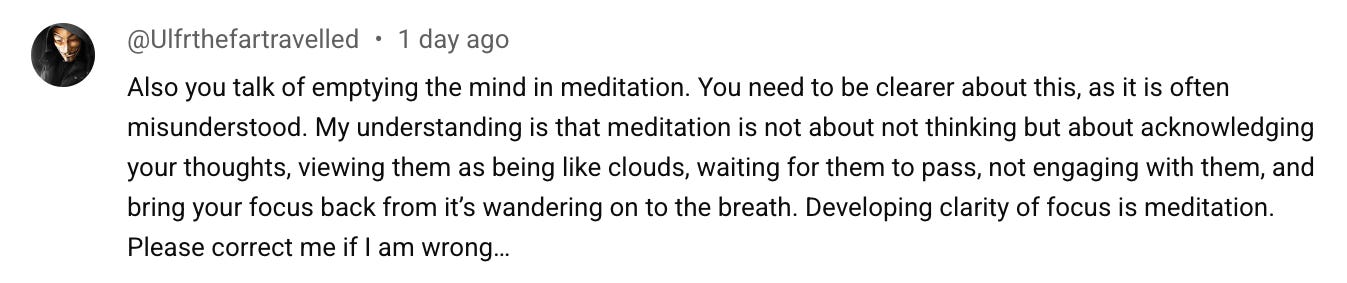
Well, Ulfr isn’t wrong. He’s describing what most people in modernity mean when they say meditation — focus, observation, watching “the clouds” pass. It’s the practice you’d learn from apps like Headspace or Calm. If your mind is restless and you need to calm down or sharpen, this is the practice that helps, especially if you need to be productive at work.
But it isn’t the only kind of meditation, and it isn’t the one Verse #6 is pointing at.
Three kinds of meditation
There are at least three kinds of meditation I’ve spent time with. They look similar from the outside — eyes closed, body still, mind directed inward — and they’re often grouped together under the single word meditation. But they do different things, and they reach different places.
Focus meditation. This is what Ulfr is describing. The point is to develop a muscle of sustained attention. The reward is calm, focus, presence. The whole tradition behind Headspace and most secular mindfulness lives here.
Vipassana, or cleansing meditation. This is a longer-form practice from the Buddhist tradition. The point isn’t just attention — it’s to systematically observe sensation throughout the body and let stored or trapped energy surface and pass. I did a ten-day Vipassana retreat years ago, and the first three days were nothing but Anapana, focused breath at a single point below the nostrils. Then the practice deepened into Vipassana proper. It’s not what verse #6 is asking for either, but it’s also not the same as Headspace-style meditation.
Void, or emptying meditation. This is the one I’m practicing for Verse #6. The mind doesn’t have a job. There’s no breath to return to, no thought to observe, no sensation to track. The point isn’t to focus the mind. The point is to dissolve it.
Like diets — ah, a topic as simple yet controversial as diets — there are as many kinds of meditation as there are reasons to sit. And like diets, the most important part is finding the one that works for you and sticking with it. Simple yet hard, neh?
What’s up with Verse #6?
Before we get to the Void, let’s sit with what this verse is asking. Here it is in full:
The valley spirit that doesn’t die
we call the dark womb
the dark womb’s mouth
we call the source of Heaven and Earth
as elusive as gossamer silk
and yet it can’t be exhausted
Six lines. The most elusive verse I’ve encountered so far in the Tao Te Ching.
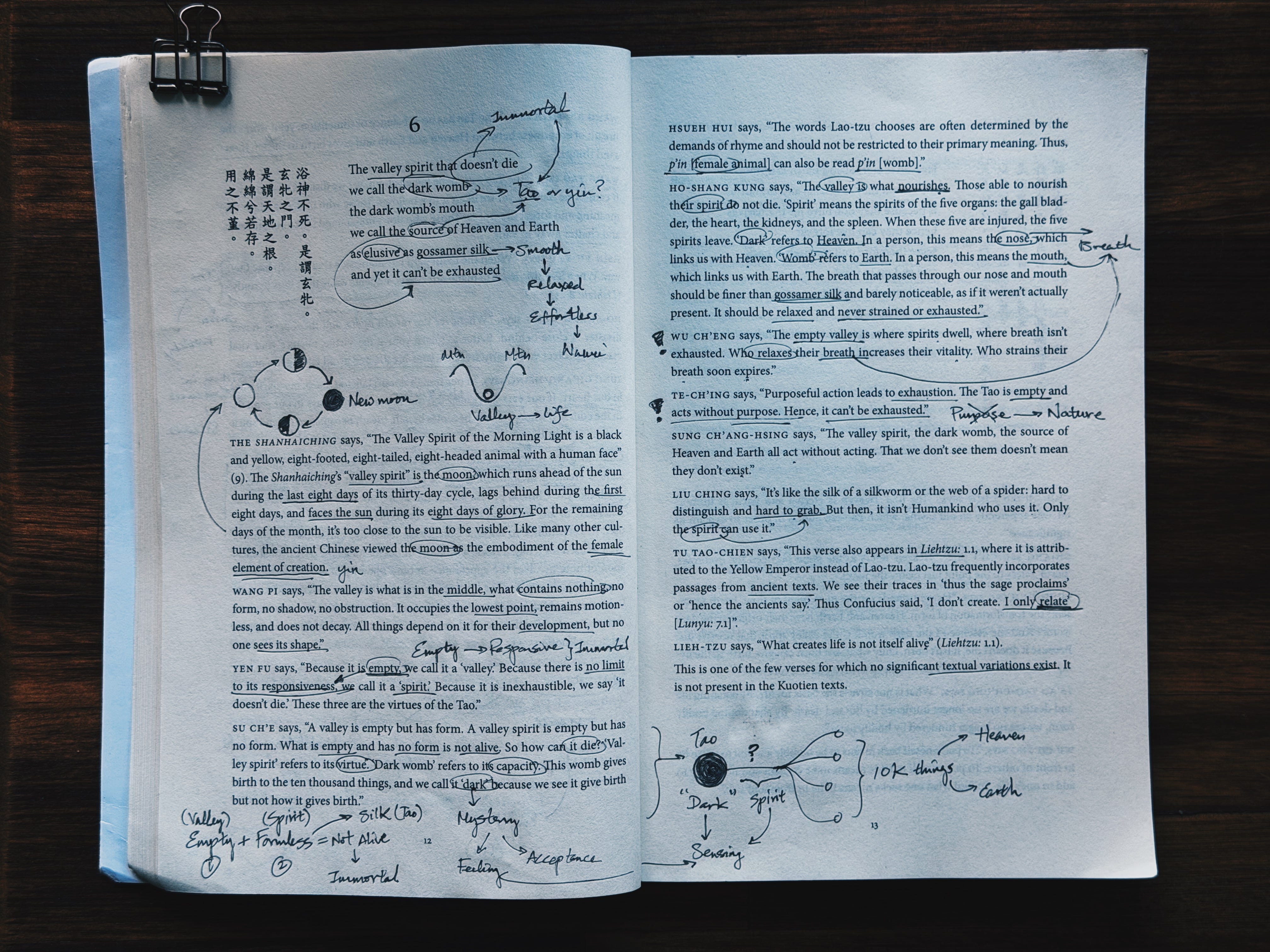
What’s the verse pointing at? A source. Something that doesn’t die because it was never alive in the conventional sense. Something inexhaustible because it doesn’t do anything — it simply is, and from it, everything else arises. The valley spirit. The dark womb. The gossamer silk.
The commentator Yen Fu compresses the verse: Because it is empty, we call it a valley. Because there is no limit to its responsiveness, we call it a spirit. Because it is inexhaustible, we say it doesn’t die. Three virtues of the Tao — empty, responsive, inexhaustible.
The order matters. Empty comes first.
Twice in the commentary tradition, the same sequence appears: emptiness, then spirit. Not at the same time. Not the other way around.
First empty. Then spirit.
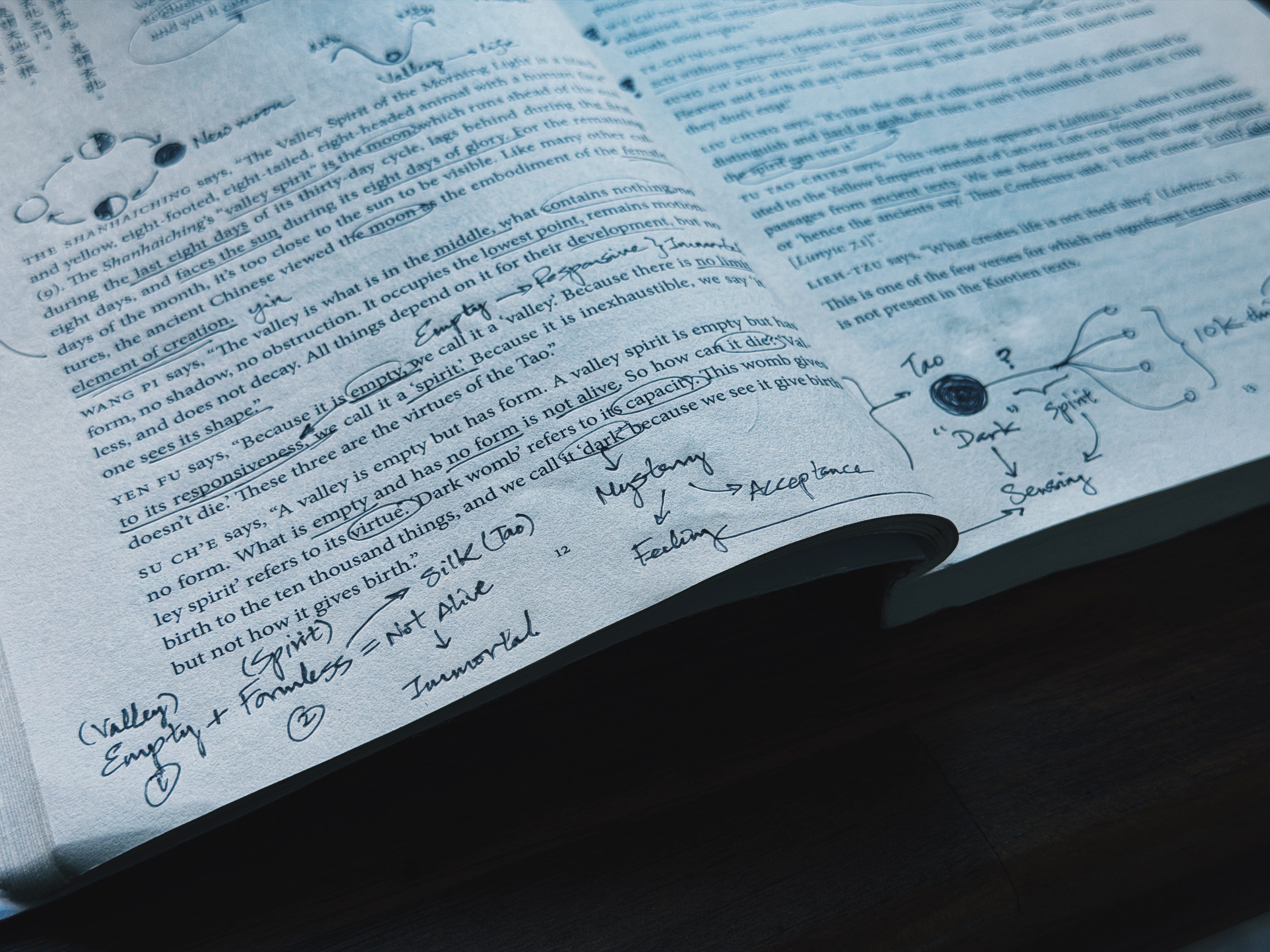
If that’s the architecture of the verse, then the meditation that goes with it can’t be a focus meditation. Because focus is still a doing. It’s a quieter doing than most of what we do, but it’s a doing. Verse #6 is asking for the absence of doing. It’s asking for a temporary suspension of the mind itself, so that something can dwell where the mind usually is.
What is “emptiness”?
This is also where the term emptiness tends to trip people up.
In English, emptiness sounds like deprivation. Empty fridge, empty house, empty promise. A deficit. Something that should have content but doesn’t. Heard that way, empty the mind sounds like an instruction to lack — to take something away and have less.
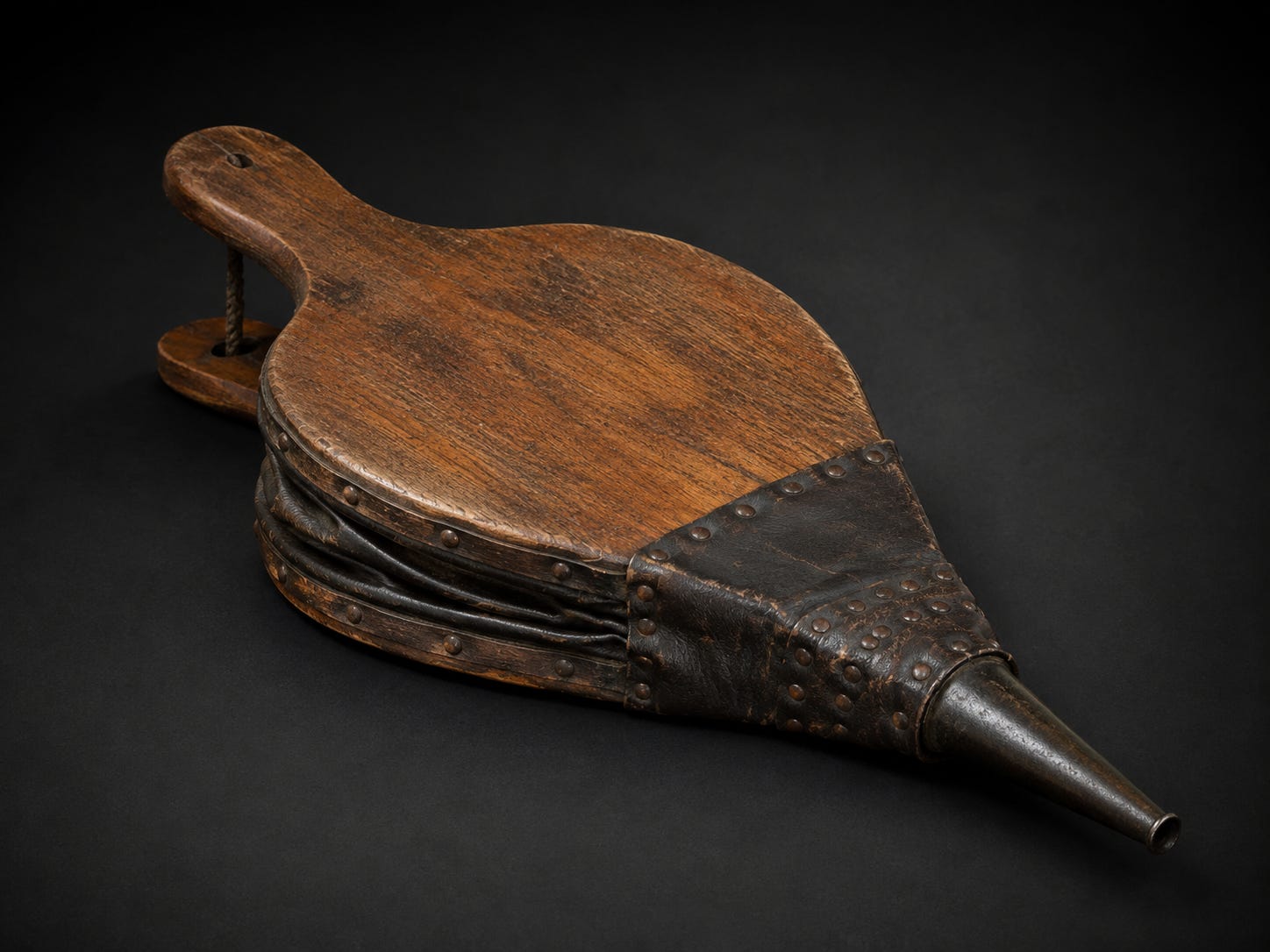
But the Taoist sense of emptiness isn’t lack. It’s the receptive capacity that lets things arise. The bellows in Verse #5 is the clearest version of this — a bellows is useful because it’s empty. If it were full, it couldn’t take in or release anything.
The valley in Verse #6 is the same. The valley is what holds nothing, and what allows everything to grow within it. “Life is lived in the valley, not on the mountaintop”, as I quoted in the Verse #6 walkthrough. The valley has the space for life to happen. The mountaintop has the view, but nothing grows there.
So emptiness isn’t absence of content. It’s the precondition for content. The room before the furniture. The silence that punctuates music. The pause between heartbeats.
And the problem most of us have isn’t that we’re empty. It’s that we’re full. Full of plans, opinions, identities, worries, half-formed sentences we’re already rehearsing for conversations we haven’t had yet. We are at capacity. Being at capacity means nothing new can arrive. Being at capacity means feeling overwhelmed, the harbinger of anxiety.
The signal-to-noise ratio is broken — not because the signal isn’t there, but because we’ve crowded the channel.
Emptiness is what reopens the channel. That’s why it has to come first.
Touching the Tao
The commentator Liu Ching from 1,500 years ago gives the cleanest answer to Ulfr’s question. He says of the Tao:
“It’s like the silk of a silkworm or the web of a spider: hard to distinguish and hard to grab. But then it isn’t humankind who uses it. Only the spirit can use it.”
Only the spirit can use it.
Aha! This was the key that opened up the Verse for me.
Not the mind. Not the focused mind, not the calm mind, not the observing-the-clouds mind. The mind is still humankind. The mind is still a doing. The gossamer silk slips through the mind’s fingers like sand no matter how skillfully the mind grasps.
The spirit, in Liu Ching’s frame, is what’s there when the mind isn’t doing. It’s what’s available once the meditator has been suspended. And it’s the only thing fine enough to touch what Verse #6 is pointing at.
This is why focus meditation can’t fully reach where this verse is asking us to go. It cultivates a better grasper.
Verse #6 isn’t asking for a better grip. It’s asking us to stop gripping.
Enter the Void
There’s one more thing about the Void meditation that distinguishes it from the others, and it’s the most important thing.
Other meditation practices add. They build focus. They build calm. They build observational capacity. They build equanimity. The meditator is improved over time — slowly, incrementally, additively. This is real. It works.
Void meditation doesn’t add anything. It only dissolves.
The frame I keep returning to is from Buddhist thought: people are naturally good, and when you dissolve the bad, the good naturally arises.
Apply that here and the move clicks into place. There’s nothing wrong with you that needs fixing. There’s only accumulation that needs dissolving. The good is what’s underneath, always there, waiting for the bad to clear.
Void meditation is the practice of dissolving the accumulation. It doesn’t strengthen your mind. It weakens what’s been crusting over what was already there.
How very Tao Te Ching-like indeed.
Practicing Void meditation
Here’s how the practice works, for me at least.
Before I sink into the Void, I usually do two rounds of counting meditation as a warm-up. Inhale, count one. Exhale, count two. Up to twenty-five. Then start over and count to twenty-five again. Twenty-five full breaths.
The counting isn’t the practice, but rather the bridge. A mind in motion wants to remain in motion. So give it something to focus on while you amp down. The counting does that. After two rounds, it usually settles down. The thoughts are still there but they’re not pulling as hard.
I shared this counting bridge in last week’s Sunday Reflection if you want it described in context at timestamp 42:00.
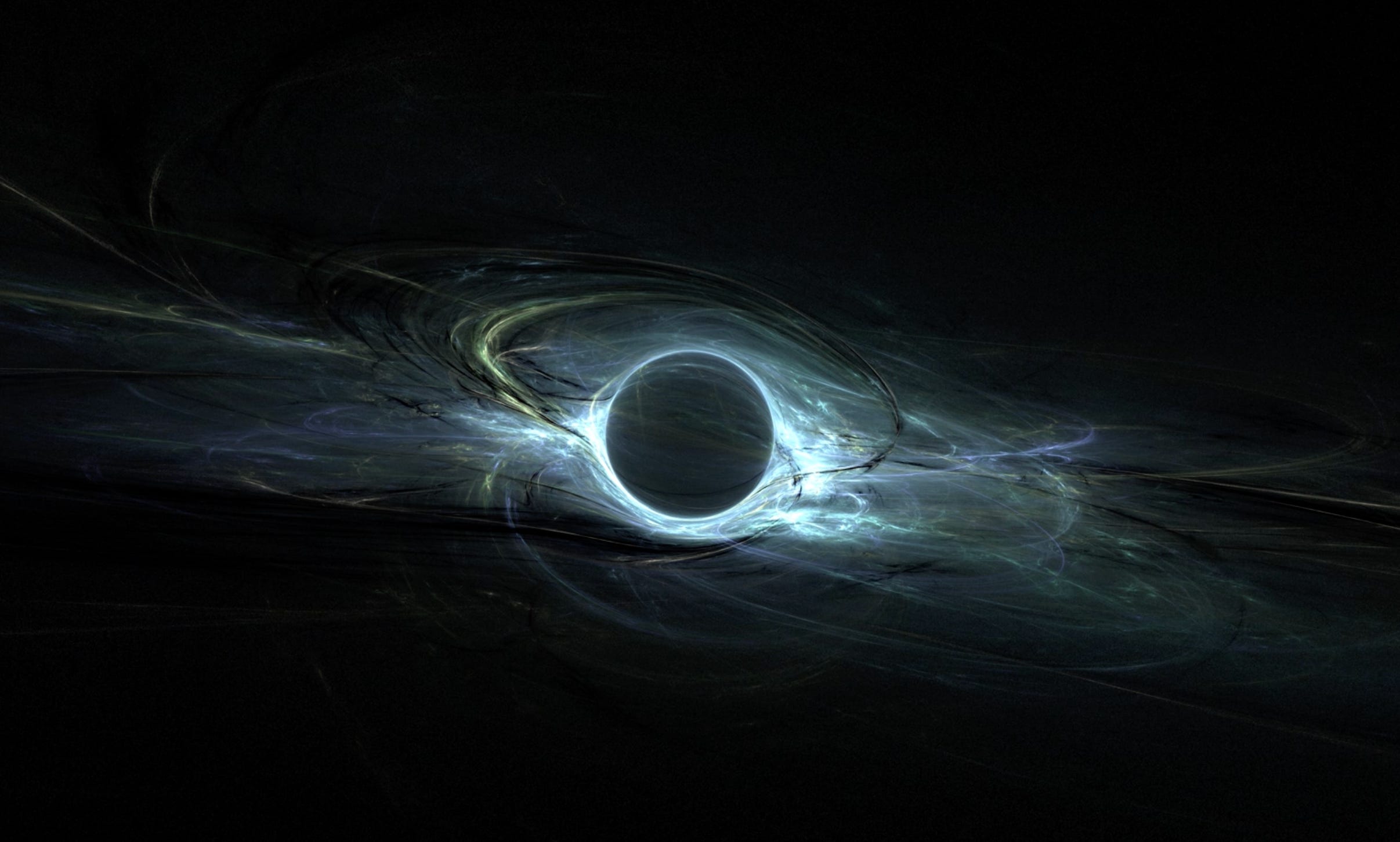
Then I sink in. I close my eyes and imagine a perfect black sphere — a Void — and slowly let myself enter it. Inside the sphere, everything dissolves. Clothing dissolves. Worries dissolve. Problems dissolve. Thoughts dissolve. The projects, the obligations, the identity I walk around in all day — all of them stay outside the sphere or, you guessed it, gets dissolved inside the Void.
Once I’m inside, it’s silent. Everything else is muffled. I’m being held in the dark womb, naked, bare, empty.
I sit there for 10-30 minutes. Time dissolves into Kairos, but it’s useful to set a timer if you need a Chronos container, so you’re not late to your next meeting.
What I find is that the dissolving happens faster than I would have expected. I practiced this yesterday morning, and thoughts that would usually take me for a ride simply dissolved within five seconds. Not because I forced them to or because I observed them and waited for them to pass. They just stopped having anywhere to land. The Void doesn’t have hooks.
When I opened my eyes after twenty minutes, the leaves on the trees in front of me looked greener than I remembered. They had shades of green I hadn’t noticed before. The world felt slightly clearer, slightly lighter. Perhaps we are more in touch with reality when we remove the noise from in front of it.
I’ll see you on Sunday for our weekly reflection, my friends.
For the full deep dive of Verse #6 and the commentary tradition, the video is here:
I introduce the Void practice itself at the end timestamp 27:12.
Thank you for sharing! I love reading your posts on the verses and contemplating different perspectives. Looking forward to reflecting on Sunday! 💖✨💖